
Linen bread bags, and what the cloth actually has to do
Searching for a linen bread bag is really asking for one property: a cloth that breathes at the right rate. Flax earns its reputation for it, because it spins into a smooth, strong yarn that weaves flat and dense without going stiff. The property is what your loaf feels, so that is what this page is about — what our cloth is, how to judge any bread cloth in half a minute, and which fibres get there.
What the Levainry bag is made of
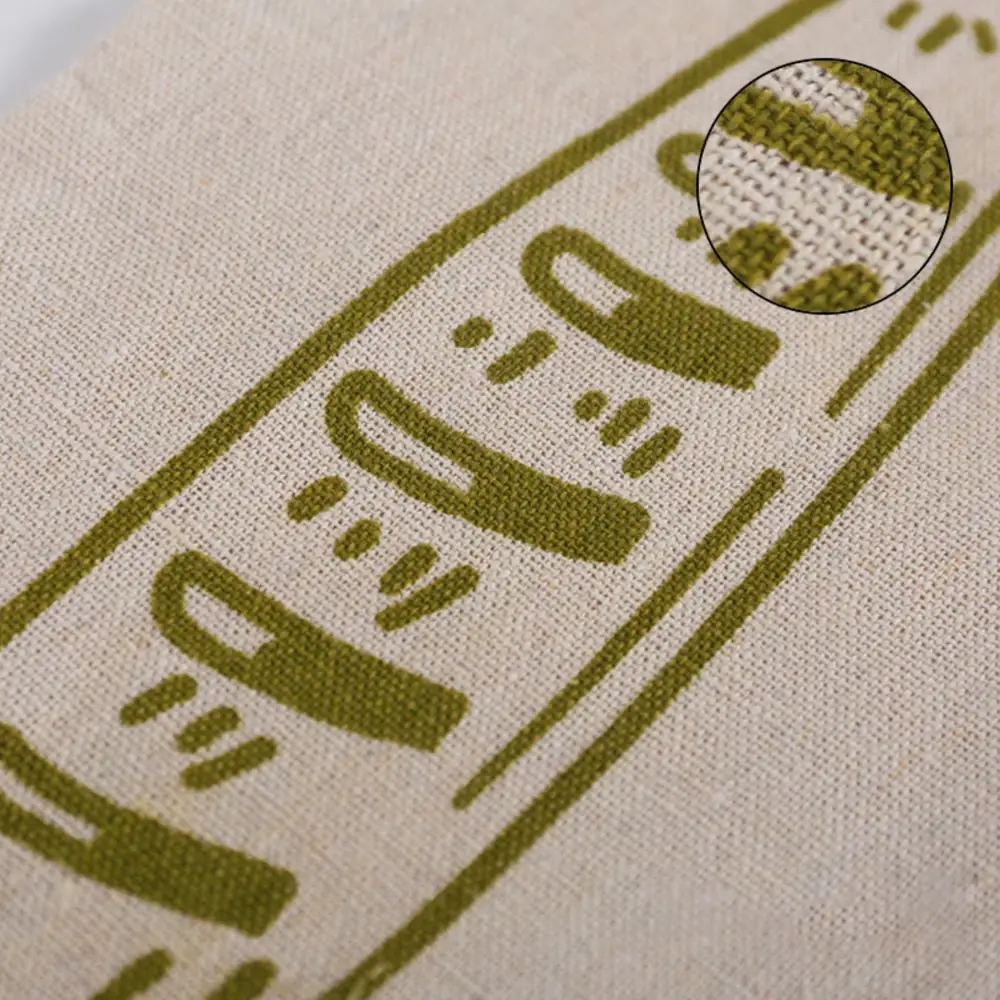
Natural woven plant fibre, as the maker declares it. That is what the specification says, and it is what we print. The cloth is unlined, unwaxed and undyed, matte, close-woven, the colour of raw oatmeal, with a drawstring of the same natural colour and an olive loaf printed flat into the weave.
We describe the cloth by what it does, because the weave is the measurable part and the part your loaf responds to. Hold this bag to a window and light comes between the threads without the room showing through. That is the check on our how we judge one page, it is what we would tell a friend to run on any bread bag, and this cloth passes it.
What a bread bag is actually managing
Bread does not go hard because it dries out. The starch in the crumb recrystallises after baking and squeezes water out of its own structure, so the crumb firms up while the water is still inside the loaf. That process is what a storage choice can slow or hurry, and it runs fastest in the cold — which is why the fridge is the worst place for a loaf and the counter is the right one. The full mechanism is in our guide on how to keep bread fresh.
On top of that, a cut loaf loses some water to the air from its open face. So a bag has two jobs at once, and they pull in opposite directions. It has to slow the air moving across the loaf, or the crumb dries at the cut. And it has to let the loaf’s own steam leave, or that steam condenses on the crust and turns a crackling bake soft and leathery by morning. A sealed plastic bag does the first job and fails the second. Bare air on a board does the second and fails the first.
A close-woven natural cloth is the only common material that does both, and it does them passively — no lining, no valve, nothing to adjust. That is the whole of the idea, and it is why the category exists at all.
Why the weave decides more than the fibre
Hold two bags up to a window, one linen and one cotton, both woven close. You will struggle to tell which is which by how the light comes through, and the loaves inside them will age at nearly the same rate. Now hold up a loose, open-weave cloth next to a dense one: the difference is obvious immediately. Weave density outranks fibre choice by a wide margin.
That is not a reason to be indifferent to the fibre. Linen dries quickly after a wash and keeps a crisp hand for years. Cotton is softer from the first day and more forgiving of a hot machine. Hemp is tough and coarse, jute coarser still and usually too open. But all of those differences sit below the one that counts, and a cloth sold on its fibre name alone has told you the least useful thing about itself.
Natural bread cloths, side by side
| Cloth | How it behaves around bread | What to watch |
|---|---|---|
| Linen (flax) | Weaves flat and dense, dries fast after washing, keeps a crisp hand | Sold loose-woven as often as close-woven — judge the cloth, not the word |
| Cotton | Soft from day one, takes a warm wash well, close weaves perform like linen | Very light cotton goes translucent and lets the crumb dry |
| Linen and cotton blended | Most of the behaviour of both; a common choice for bread cloths | Blend ratios are rarely published, so the cloth itself is the evidence |
| Hemp | Strong and long-lived, softens with use | Often woven coarse, which opens the cloth more than bread wants |
| Waxed or lined cloth | Close to airtight; keeps a soft sandwich loaf soft | Holds steam against a crust, so a crusty bake goes leathery |
The last row is the one people get wrong most often, because a waxed wrap and a woven bag look like the same kind of product and behave like opposites. A wax coating is a deliberate barrier. It suits a soft supermarket loaf with no crust to protect, and it works against everything a home oven turns out with a crust on it.
Judging a bread cloth in thirty seconds
Four checks, in the order that settles the question fastest.
Hold it to the light. You want to see light through the cloth without seeing the room through it. Too tight and steam has nowhere to go; too open and the crumb dries at the cut face.
Rub it between finger and thumb. A close weave feels like one continuous surface. A loose one feels like a grid, and you can feel the individual threads move against each other.
Look at the closure. A drawstring closes without sealing, which is exactly what the loaf wants. A zip or a clip seals, and a sealed cloth bag behaves like a plastic one at several times the price.
Check the lining. Reach inside. Bare cloth on both faces is what you want for anything baked with a crust. A film or a wax layer changes the product into something else.
Size, and what actually fits
Size is where this category disappoints people most often, because a folded loaf creases and the crust goes soft along the fold. The bag on this site is 40 by 30 cm, which clears a 2 lb tin loaf, a round boule up to about 22 cm across, or two small batards side by side. That covers nearly everything a domestic oven turns out.
Below about 38 cm you start folding ordinary loaves to close the bag. A long narrow sleeve is a different object again, made for baguettes rather than for the loaves most people bake at home.
Living with a natural-fibre bag
Keep it where you keep the bread board. Cut side down on the wood, bag over the top, and a home-baked loaf holds up for two to three days on the counter — the routine set out in our guide to storing sourdough, and the same routine works for a tin loaf.
Wash it with the tea towels on a normal warm cycle and line dry. Skip the fabric softener: it leaves a film on the threads and closes the weave, which is the one property you chose the bag for. Expect the cloth to feel slightly stiffer after the first wash and to settle again within a week of use. There is no lining to peel, no seal to perish and no clip to lose, so the bag goes back into service as soon as it is dry.
Over a year of weekly baking, one cloth bag stands in for fifty-odd plastic ones that never get bought. That is the quiet part of the case, and it holds whatever the cloth is called.
Questions about linen and natural-fibre bread bags
What does a linen bread bag do for a loaf?
It holds the loaf in a cloth that is close enough to slow the air moving across the crumb and open enough to let steam leave instead of trapping it against the crust. The crumb keeps its moisture, the crust keeps its crackle, and the loaf stays on the counter where bread keeps best.
What is the Levainry bread bag made of?
Natural woven plant fibre, as the maker declares it on the specification. It is unlined and unwaxed, matte, close-woven and the colour of raw oatmeal. We publish the fibre exactly as the specification states it, and we let the weave carry the argument, because the weave is what the loaf responds to.
Is linen better than cotton for bread?
They behave more alike than the marketing suggests. Linen dries faster after a wash and holds a crisper hand, cotton starts softer and takes a warm wash just as well. Both keep bread properly when they are woven close and left unlined. A loose weave in either fibre lets the crumb dry out.
How do you wash a linen or natural-fibre bread bag?
Shake the crumbs out, then a normal warm machine wash with the tea towels, and line dry. Skip fabric softener: it coats the threads and closes the weave, which is the one property you are paying for. A natural cloth stiffens slightly after the first wash and settles again with use.